

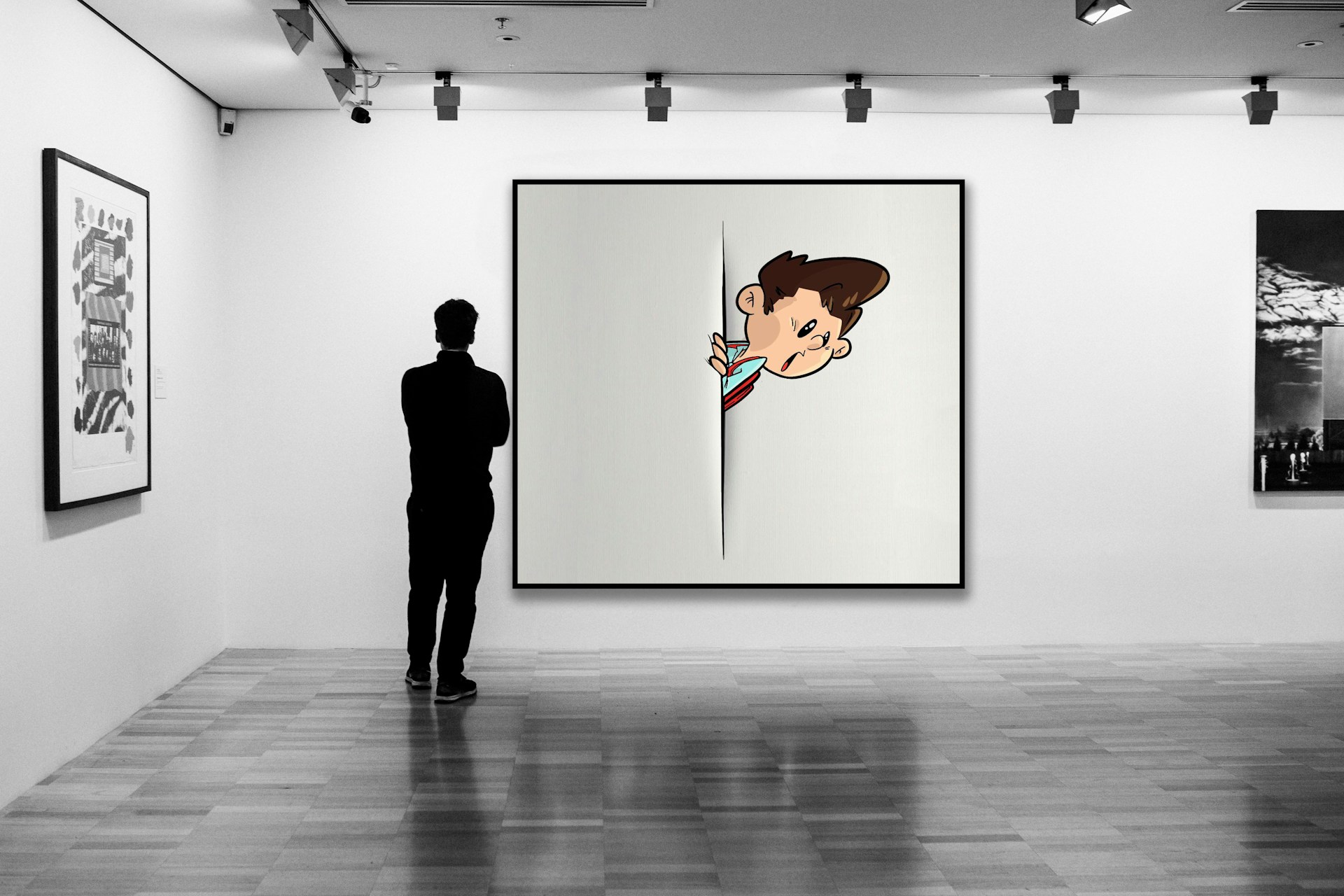
“I thought art is about feeling only.”
“I do not know what to look at. Where should I begin?”
“I am so afraid of interpreting the artworks wrong.”
I often hear these statements whenever I mention that I analyse artworks. It dawned on me that people come from different backgrounds and do not know how to approach art, especially when they are not designers or artists. Hence, they may not have the vocabulary to observe artworks or to discern works made by humans from those generated by AI (Artificial Intelligence).
If we want more people to be involved in the arts, or to develop a taste for artworks made by humans rather than generative art, we need to provide guidance rather than expect people to know what to do.
There are many ways to understand art, and here are the ways I approach artworks.
Discover the stories behind the artworks
When we approach artworks purely as objects, we miss out on the processes and stories behind them. I relate this to meeting someone new. Every time we meet someone new, we ask these questions to know them.
- “What is your name?”
- “Where are you from?”
- “What do you do?”
When looking at artworks, we read artwork labels and artist statements to get a gist of the artwork. The information found on artwork labels includes the artist’s name, the artwork’s title, the medium, the year, and a description. This information provides the context for the artwork. For example, is the artist using materials native to their location? What technology was available to the artist at that time? Is the artist exposed to art-making from different cultures? There are many nuances to unpack in an artwork, which leads me to the next point.
Describing artworks
Just like meeting someone for the first time, we make observations of the other person, such as their physical traits and their body language. These characteristics give clues to who a person is. In the same way, artworks need to be described to uncover their stories.
There are no rules to dictate how you should view an artwork. For a first-timer, I suggest that you start by viewing a painting. Start from the top left, then let your eyes move and cover as much area as possible. At each part, describe what you see. What are the objects found in an artwork? What are the colours used? If it is a 3D sculpture in an open space, walk around it and describe how it looks from different angles.
To improve visual vocabulary, learn about the elements of art and the principles of design. Elements of art are the building blocks of an artwork, such as line, colour, space, value, form, and texture, while principles of design refer to the way those building blocks are arranged, such as balance, variety, emphasis, pattern, movement, and proportion.
Once you have described the artwork’s elements, formulate your thoughts and emotions about it. What caught your attention about the artwork? Was the artwork pleasing or uncomfortable when you viewed it? As a beginner, the important thing is to recognise your observations about artworks and not worry about being wrong at this point.
Leave the judgement outside
Sometimes it is easier to judge someone based on how they look, but that is often not the full picture. Most of the time, we need to clarify with the other person to understand their thoughts. The same is true when we try to make sense of an artwork. Sometimes we encounter artworks that challenge our worldviews; we might project our limited views onto them.
When we judge only through a limited lens, we do a disservice to the artist by falling into our biases rather than uncovering what the artist originally intended. Therefore, we need to clarify the information about the artwork rather than relying on practices you are familiar with. Every artwork is shaped by the climate, resources, religion, and political context in which the artist lives.
Talk to a curator (and to an artist)
One can request curatorial tours in advance from galleries and museums to get more information beyond artwork labels. Curators act as a bridge between the artworks and the audience. They work with artists, managing and displaying artworks in line with the exhibition’s theme, making them experts in this area.
As for speaking to an artist, it is rare to speak to the artist unless there is an artist talk. If you get a chance to speak with them, it is a privilege because you are speaking with the person who created the artwork and gaining personal insights beyond the artwork descriptions in an exhibition.
Use AI tools for an overview, and not for the final context
AI tools are helpful to get an overview of an artwork. Read artwork labels and search on Wikipedia or AI tools such as Claude or Gemini for an overview. A word of caution: Wikipedia may not be 100% accurate, and AI tools can hallucinate. Therefore, I recommend cross-referencing with experts, books and journal articles on Google Scholar.
AI tools are also helpful when you are travelling to a museum where most of the descriptions are in an unfamiliar language. One can prompt the AI to translate and provide the background of the artworks. Again, this is for an overview. Do remember AI is a tool to help us understand better, and not to replace human thoughts.
It is all right to make mistakes as a beginner
There are many ways to observe art. Approaching art like meeting someone new is just one of the methods that I use. As beginners, we may misinterpret visuals, and it takes practise to analyse artworks, and it gets better over time.
Art reflects the world we live in. Just as understanding humans, observing art requires time and empathy to see perspectives we may not be aware of. After all, understanding an artwork is also understanding the human who created it, a message waiting for us to uncover.
Featured image by Simona Sergi on Unsplash
